
Air Freight vs Sea Freight from Turkey
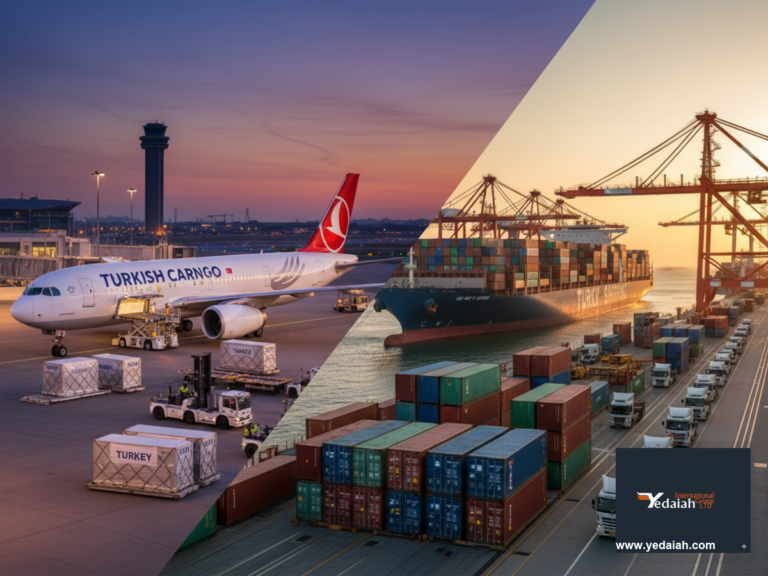
When a shipment must arrive quickly, the choice between air freight and sea freight can have a direct impact on both budget and customer satisfaction. Turkey’s strategic location gives exporters and importers access to well‑developed air and maritime networks, but each mode offers distinct advantages. Understanding the trade‑offs in cost, speed, and practical use cases helps you decide which service aligns with your business goals.
Cost considerations: What you pay for speed
Air freight is typically more expensive per kilogram than sea freight because you are paying for the premium of rapid transport and handling. The main cost drivers include:
- Weight‑based rates (often calculated in chargeable weight)
- Fuel surcharges and security fees
- Terminal handling and customs clearance fees
Sea freight, whether full container load (FCL) or less‑than‑container load (LCL), spreads costs across the volume of cargo. Pricing is influenced by container size, port fees, and the distance between the Turkish port of origin and the destination port. For large, non‑perishable shipments, sea freight can reduce logistics spend dramatically, while still delivering reliable service.
Speed and transit times: How quickly can your goods move?
Air freight from major Turkish airports such as Istanbul Airport or Ankara Esenboğa can reach most global destinations in 1‑5 days, including customs clearance. This makes it the preferred choice for high‑value, perishable, or promotional items that cannot tolerate delays.
Sea freight from Turkish ports like Istanbul, Mersin, or Izmir typically requires 10‑30 days, depending on the route and any trans‑shipment points. While slower, sea freight offers predictable schedules and the ability to move bulk volumes that would be impractical by air.
When air freight makes sense for time‑sensitive shipments
Consider air freight when:
- The shipment is high‑value or fragile, and insurance costs are justified by faster delivery.
- Market demand is seasonal or promotional, requiring inventory on hand within days.
- Products are perishable, time‑critical, or have a short shelf life (e.g., fresh food, pharmaceuticals).
- You need to meet strict delivery windows for e‑commerce orders or B2B contracts.
When sea freight is the smarter choice despite time constraints
Sea freight can still be appropriate for time‑sensitive projects when:
- The cargo volume is large enough that air freight would be prohibitively expensive.
- Lead times can be planned in advance, allowing buffer days for customs and inland transport.
- The product’s value per kilogram is low, making cost savings a priority over speed.
- You can combine sea freight with expedited inland transport (e.g., rail or road) to shorten the overall door‑to‑door timeline.
Practical tips for selecting the right mode
To make an informed decision, follow these steps:
- Calculate the total landed cost for both air and sea, including freight, customs brokerage, insurance, and inland transport.
- Map out the required delivery date and work backward to identify the latest feasible departure date for each mode.
- Assess the risk tolerance of your supply chain—consider potential delays, weather impacts, and port congestion.
- Leverage a freight forwarder with expertise in both air and sea logistics to obtain accurate quotations and handle documentation.
Choosing between air freight and sea freight from Turkey depends on balancing cost against speed and the specific requirements of your shipment. By evaluating the factors above, you can align your logistics strategy with business objectives and keep customers satisfied.
Ready to ship your time‑sensitive cargo with the right solution? Get a free quote